
Download Windows Vista Bootable USB: How to Do It in 2025


 5 min. read
  Updated on
Windows Vista, though no longer supported by Microsoft, can still be useful for older systems when fully patched. If you have a legitimate Vista product key, you can create installation media. This guide explains how to extract Vista installation files and make bootable USB or DVD media.
Disclaimer: Windows Vista reached its end-of-support in 2017, which means no new security patches or updates are available from Microsoft. Installing or using Vista on systems that connect to the internet or handle sensitive data can expose you to significant security risks, including malware attacks and data breaches. It is recommended to use Vista only on isolated legacy systems and to consider upgrading to a supported operating system for daily use.
Download Files for Vista Service Pack 1
Windows Vista Service Pack 1 English 32-bit
- X14-63452.exe
SHA1: 3B1A5E4B44CA2C15C327CD3DFB028833E0036FA8 - Boot.wim
SHA1: CE5F498008BC71ABF14494F3F4A13D7A9BAA2309 - Install.wim (2,783,166,763 bytes)
SHA1: 487726AAC8AAFE9FFFCE3F4C42463BB13A8E9C3E
Windows Vista Service Pack 1 English 64-bit
- X14-63453.exe
SHA1: 111CBBCCA3087CEE8B35BDF7745E478E3F92C2F5 - Boot.wim
SHA1: A0E41E47FAE3D5D0A2A3E5EFA12087AF1E002186 - Install.wim (3,587,141,686 bytes)
SHA1: FD3DDD67071373542D195209AC5E5B1702C18C4C
After verifying the file sizes and SHA1 checksums, you’re ready to create an ISO or write the files directly to a USB drive.
Extract the Vista Installation Files
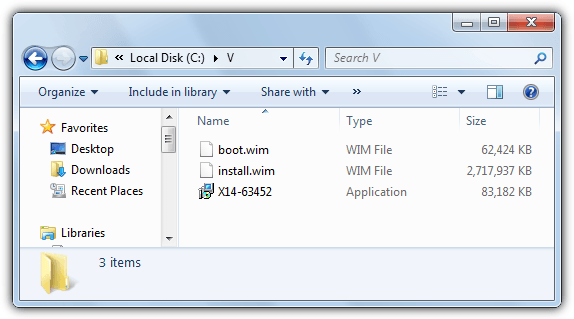
- Place the 3 files you downloaded (boot.wim, install.wim, and X14-63452.exe or X14-63453.exe) in the same folder on your computer. For example, create a folder called V in the root of your C drive (C:\V).
- Run the executable file. It will automatically extract the necessary files into a new folder named Vista. When the Vista install window appears, close it without proceeding.
The files are now extracted in the {Drive}:{Path}\Vista folder, ready to be burned to DVD or written to a USB drive.
Create a Bootable Vista Installation USB Flash Drive
Creating a bootable USB installation is often faster and simpler than creating an ISO. Follow these steps:
- Download WinUSB Maker from Josh Cell Softwares. Extract and run the executable.
- Insert your USB drive and open Windows Explorer. Drag the flash drive icon from Explorer onto the WinUSB Maker window.
- Navigate to the folder containing the 3 downloaded files and the extracted Vista folder. Drag and drop the Vista folder onto the WinUSB Maker window. (Do not drop the parent folder or individual files.)
- Click the Make USB Bootable button and confirm any warnings about drive formatting.
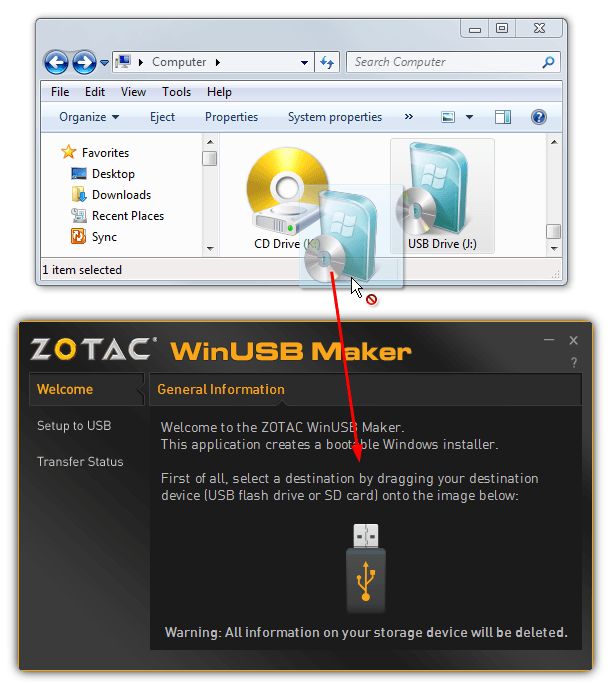
In a few minutes, your USB drive will be ready to boot and install Windows Vista.
Create a Bootable Vista Installation ISO Image
This method allows you to create an ISO image that can be burned to DVD or used to create a bootable USB drive using other tools.
- Download and install ImgBurn (or use the portable version from Softpedia) to avoid adware.
- Launch ImgBurn and select Create image file from files/folders. Click the Advanced tab, then the Bootable Disc tab, and check Make Image Bootable.
- Click the file icon next to Boot Image: and select etfsboot.com from the {Drive}:{Path}\Vista\Boot folder. (If it isn’t visible, change the file type filter to “All files…”).
- Enter Microsoft Corporation in the Developer ID field. Ensure that Load segment is set to 07C0 and Sectors to load is 4.
- Click the folder icon to select the extracted Vista folder. Click the Build button and name your ISO file when prompted. Confirm any suggestions for file system (UDF) and label changes.
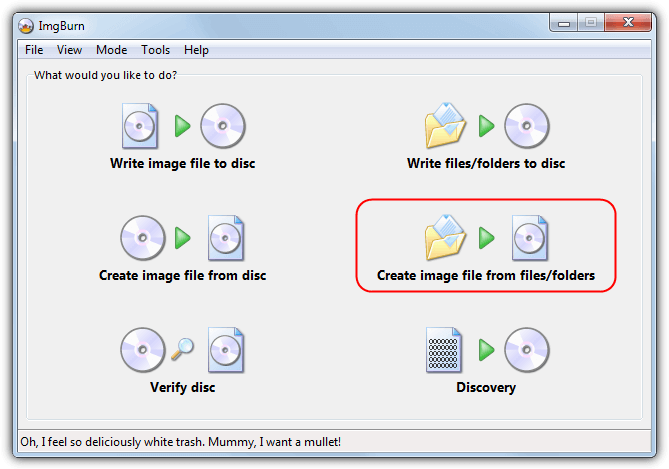
After the ISO is created, you can burn it to a DVD using ImgBurn or another tool. For best results, use a write speed of 8x or lower. Alternatively, use a Windows ISO to USB tool to transfer the image to a flash drive.
Integrating Service Pack 2 is a complex process that involves installing Vista, updating to SP2, and re-imaging. It’s generally recommended to install SP2 after using the SP1 installation media. If you don’t have Vista Service Pack 2, download it below:
Is it safe to use Windows Vista today?
Due to the end-of-support status since 2017, Windows Vista no longer receives security updates, making it vulnerable to new threats. It is best used only on isolated legacy systems that are not connected to the internet.
Why would I choose to install Windows Vista now?
Some legacy applications and hardware require Vista for compatibility. If you must use it, ensure the system is not exposed to the internet and is well-isolated.
How do I verify the integrity of the downloaded Vista files?
Check the file sizes and compare the provided SHA1 checksums with the ones calculated on your system to ensure the downloads are complete and unaltered.
Can I update Vista with Service Pack 2 after installation?
Yes, after installing Vista with Service Pack 1, you can update to Service Pack 2. However, the process is complex and generally recommended to be done post-installation for a more secure system state.
Are there any alternatives to using Windows Vista on legacy hardware?
Consider lightweight Linux distributions, which are actively supported and secure. They can often run well on older hardware while providing modern security updates.



Improve this guide

User forum
207 messages